Prefer night? Switch any time from the icon above.
?Why did that ad stop working?Fatigue separated from a weak offer.→What should we test next?One clear idea per ad, ranked.↓Is it the creative or the landing page?We test them separately, so you know which.✓How many angles do we have?Ten for your category, ordered by odds.
◆ Service · 04
Ads that teach us what buyers respond to.
We find what your buyers care about, build each ad around one idea, and let the results decide what gets made next.
Most ad production creates more files, but few clear answers.
One ad is trying to say everything
One ad carries the offer, every feature, three reviews and a discount. When it wins or loses, nobody can tell which part did it.
Variation is being called testing
New colour, new background, headline moved above the image. The ad looks different but the idea has not changed, so the test teaches you nothing.
The report stops at clicks
An eye-catching ad can still attract the wrong people. We judge ads by useful enquiries, purchases and profit.
More ads are not the goal.More useful learning is.The result writes the next brief.
The creative
Your customer already has a reason not to buy.
Most supplement ads shout a benefit. These answer the doubt.
01 / 21
Campaign one
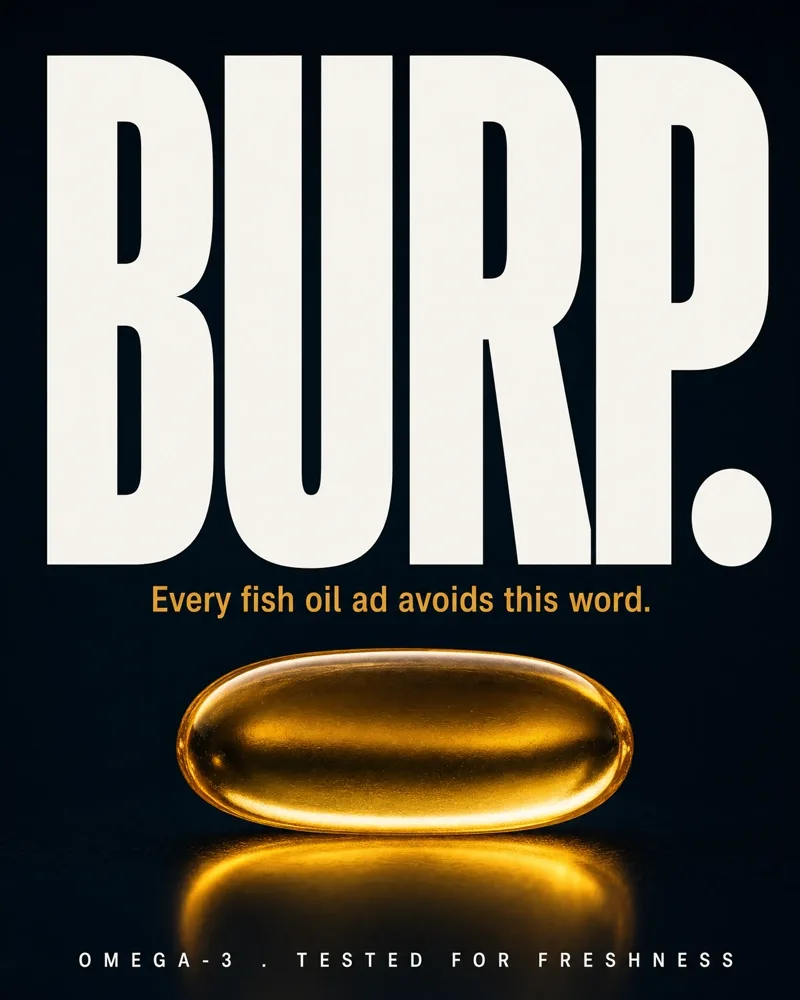
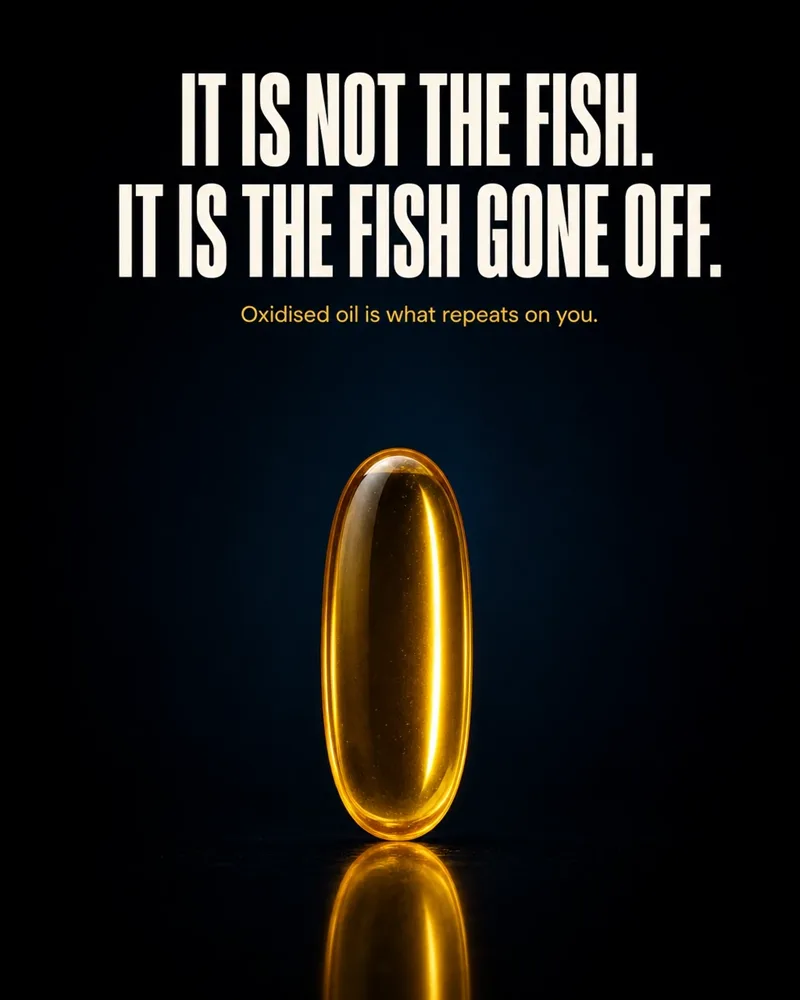
Omega-3 Freshness
Every competitor sells the same molecule, so the only thing left to compete on is the experience of taking it.
Format 4:5 feedAngle Name the side effect firstStage Cold
The objection
It repeats on me all afternoon.
Saying the word first is what earns the next three seconds. The competitor set is busy saying purity.
The objection
I thought that was just what fish oil is like.
The reframe does the selling. The burp is not the fish, it is the fish going rancid, so freshness stops being a spec and becomes the fix.
Campaign two
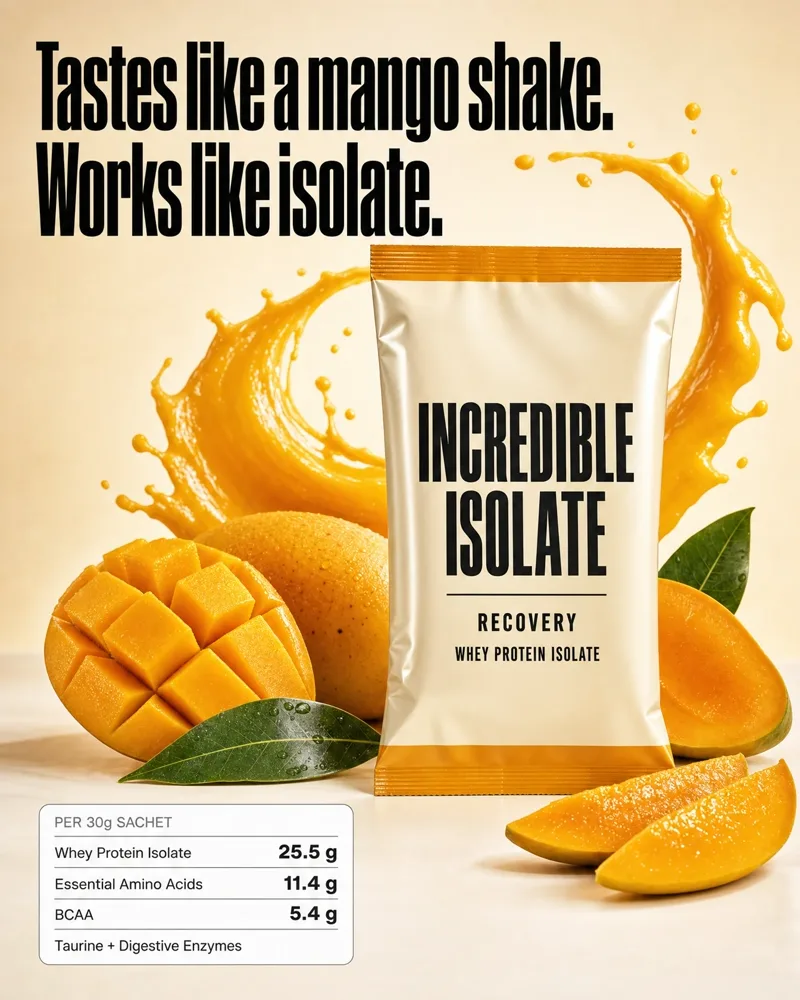
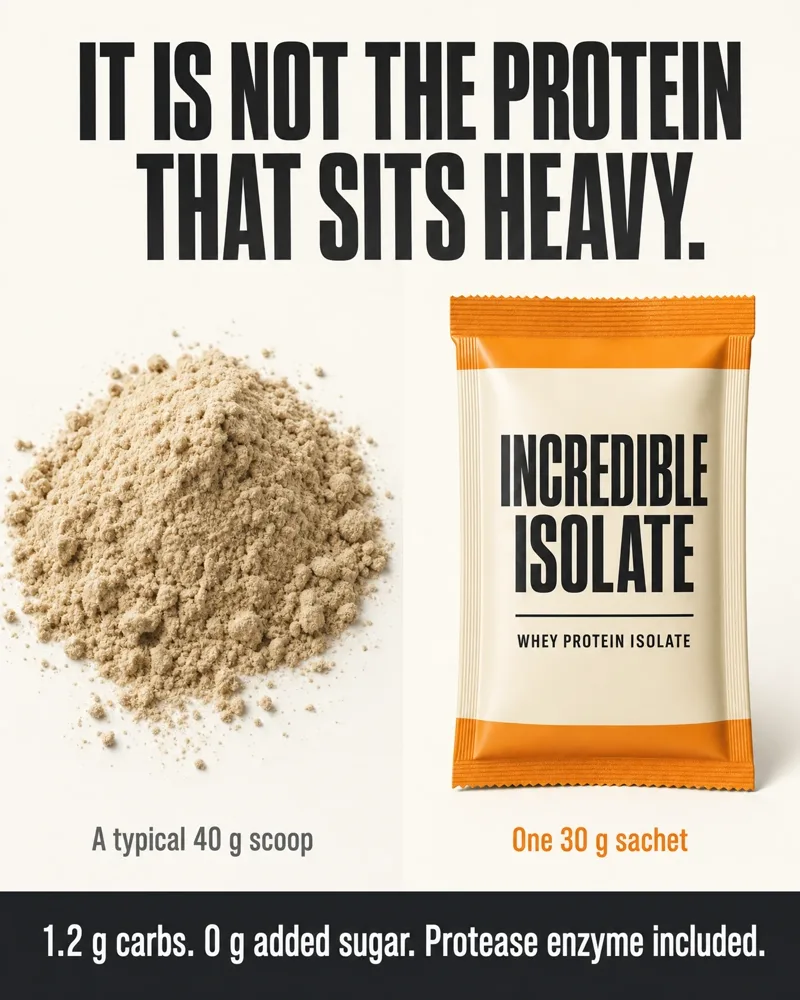
Incredible Isolate Sachet
Single-serve whey isolate. The premium is the format, so every frame has to earn the format rather than the protein.
Format 4:5 feedAngle Refuse the trade-offStage Cold to warm
The objection
Protein that tastes good is never the good stuff.
Refuses the trade-off out loud, then drops the amino acid panel underneath.
The objection
Protein bloats me.
Forty grams of loose powder beside thirty in a sachet. The argument is the picture.
In motion
Four seconds is a long time to hold a stranger.
The headline stays locked and only the fruit moves, so the reader is never asked to re-read a line that has already done its job.
Campaign three
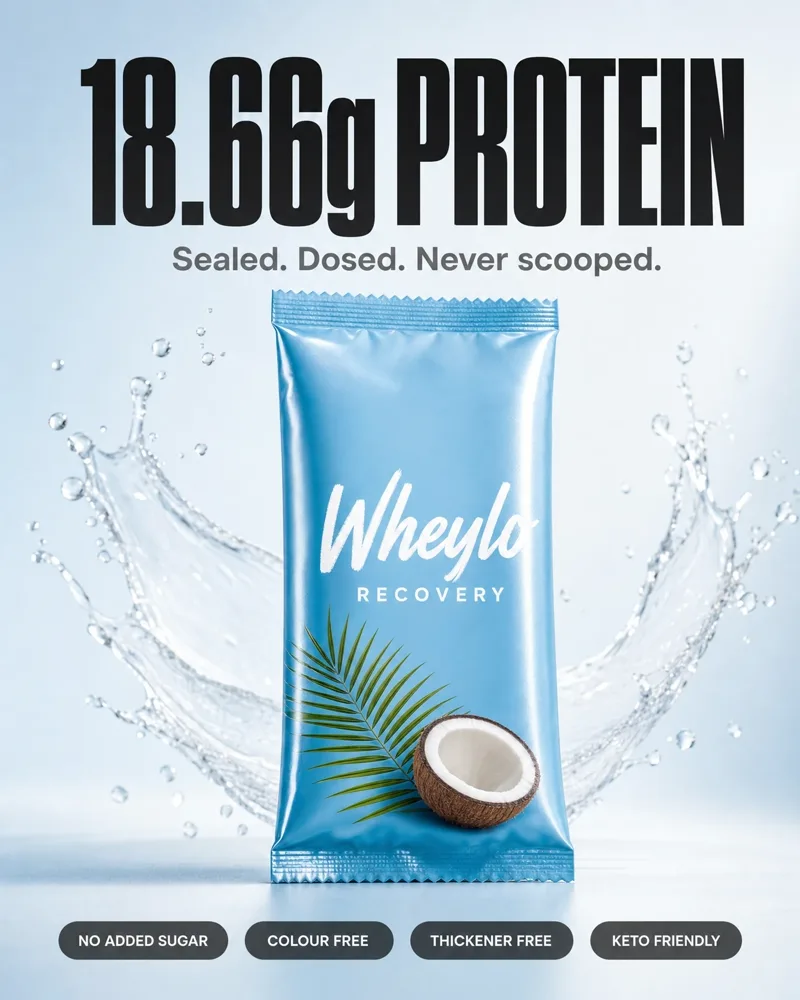
Wheylo Sealed
The same sachet argument in a softer palette, and one frame that finally puts a person in it.
Format 4:5 feedAngle A dose you can trustStage Warm and retargeting
The objection
How much am I actually getting?
18.66 g, not about nineteen. The decimal is the proof. Unrounded reads as measured; round reads as marketed.
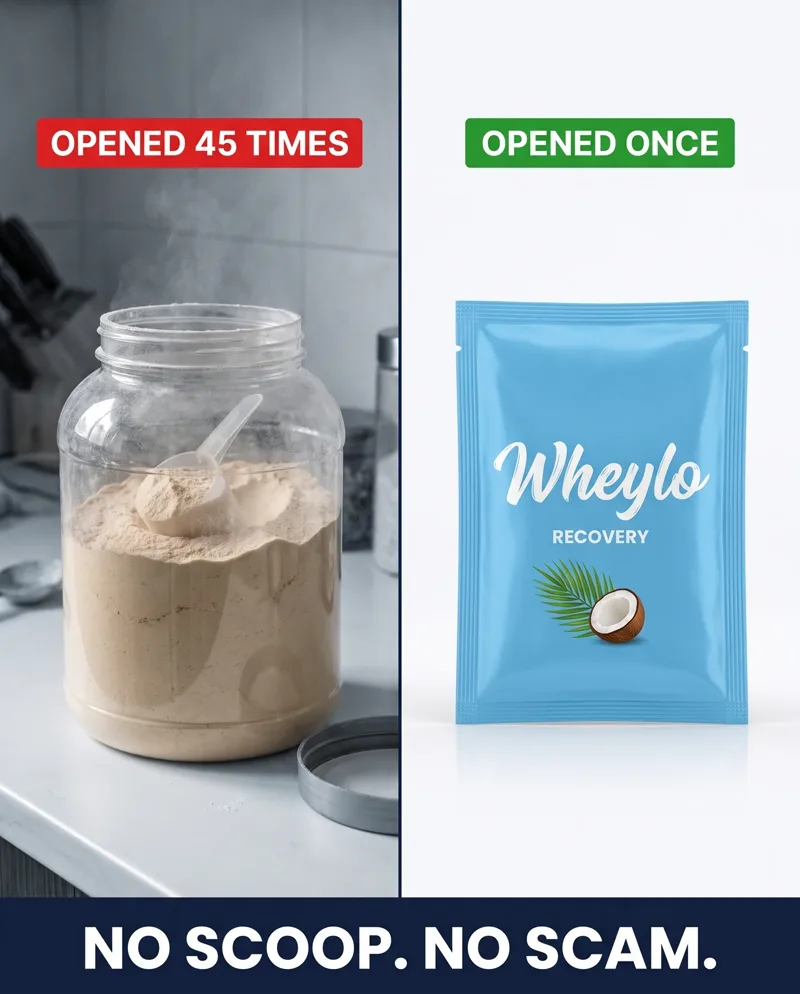
The objection
A tub is fine. Why pay more for sachets?
The hidden cost of the format, made visible. The tub stops being good value and becomes forty-five openings in a humid kitchen.
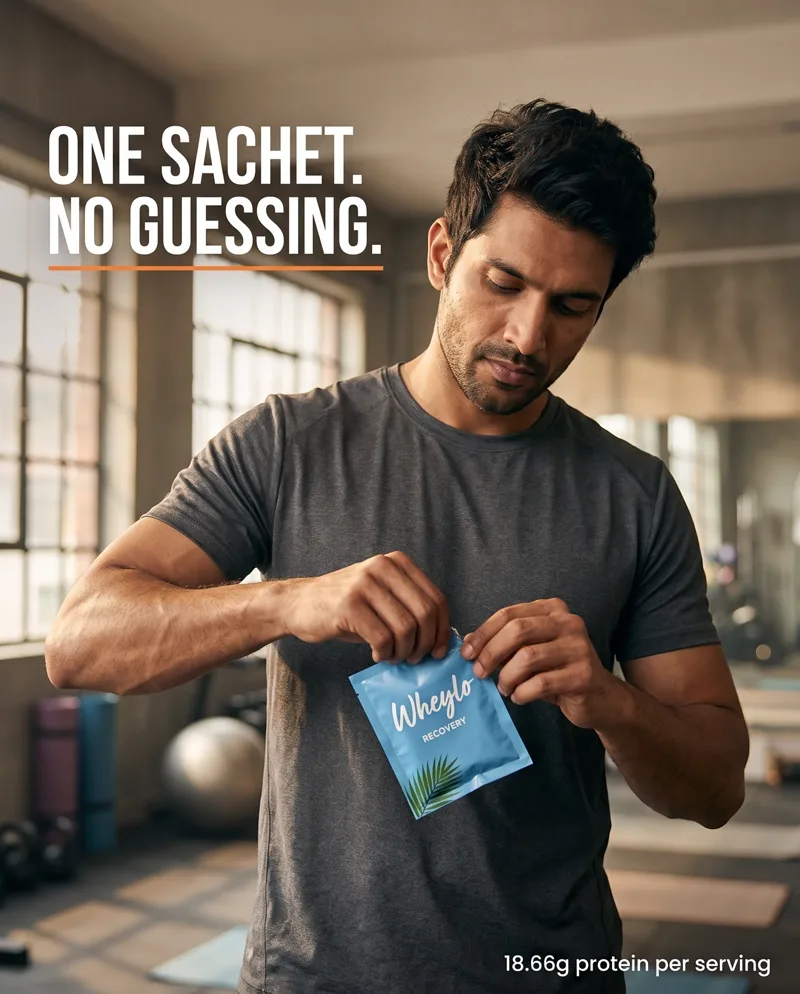
The objection
Is this for someone like me?
After eight product-first frames, one with a person in it. This is the retargeting piece, not the cold one.
Campaign four
Full range One system
Eight products held in one visual system, so a brand that sells more than one thing still looks like one brand in the feed.
Format 9:16 storyAngle One benefit per frameStage Cold and retargeting
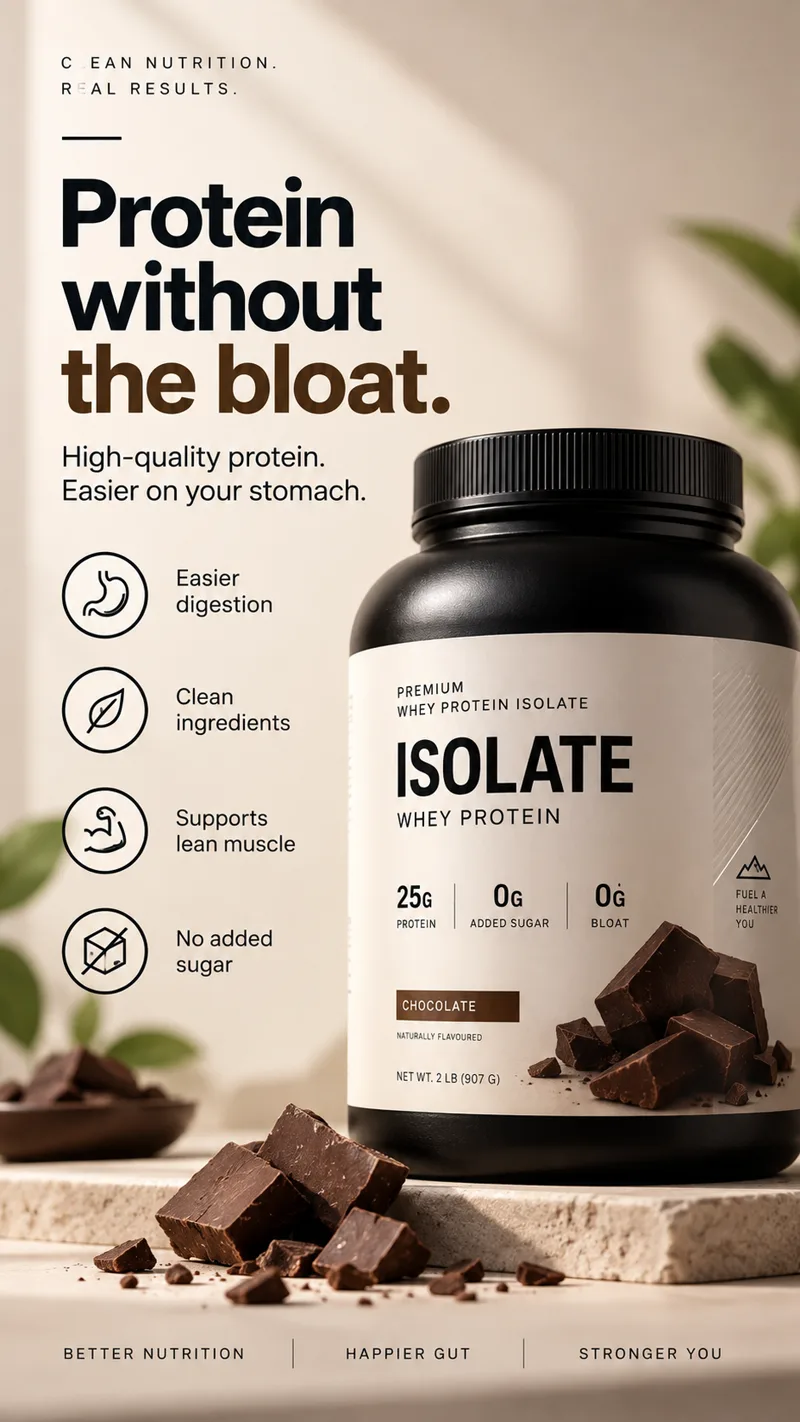
The objection
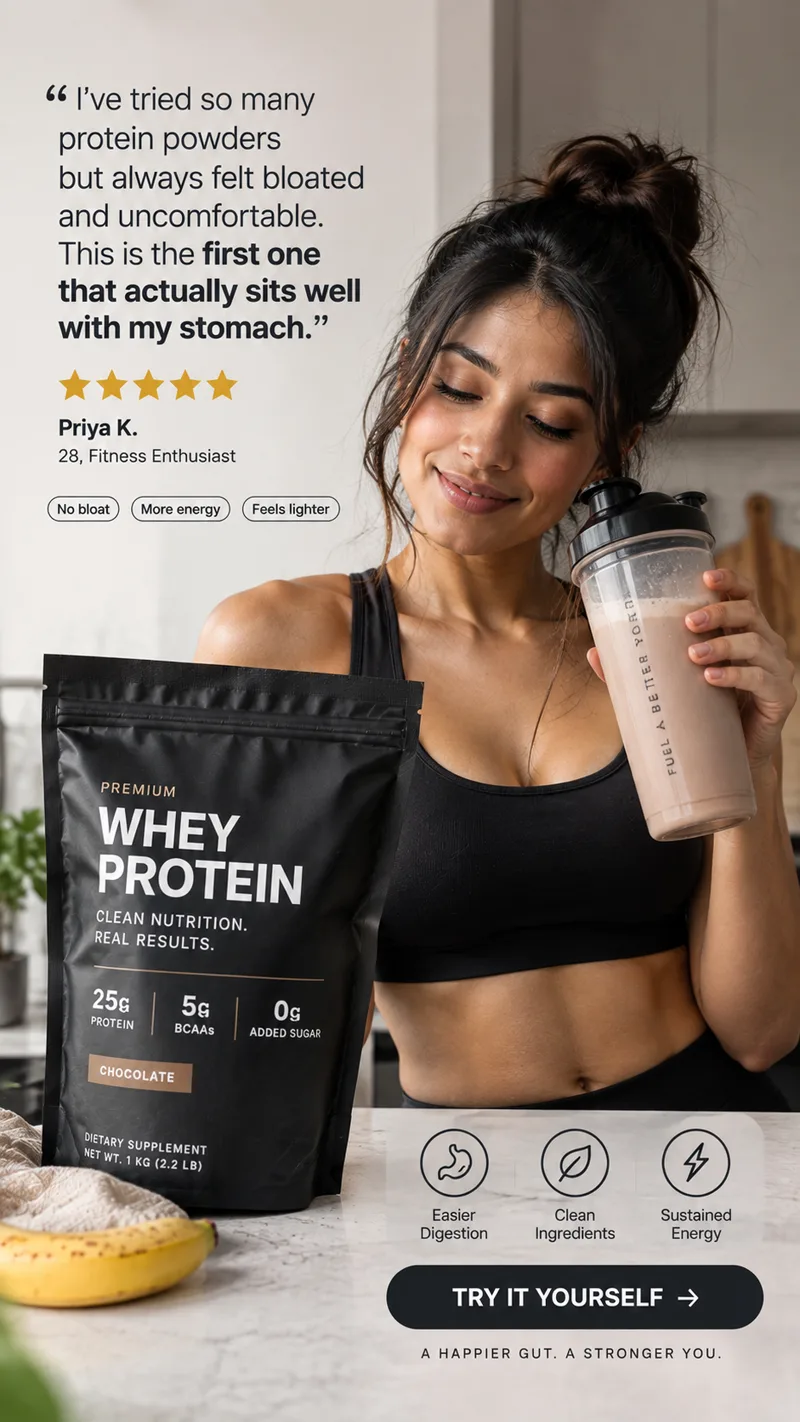
Protein wrecks my stomach.
The benefit list is four short lines, not a paragraph. On a story frame the reader is standing up and moving; anything longer is never read.
The objection
What is fish oil actually meant to do for me?
Four organs, four icons. A category people buy on vague faith gets specific enough to argue with.
The objection
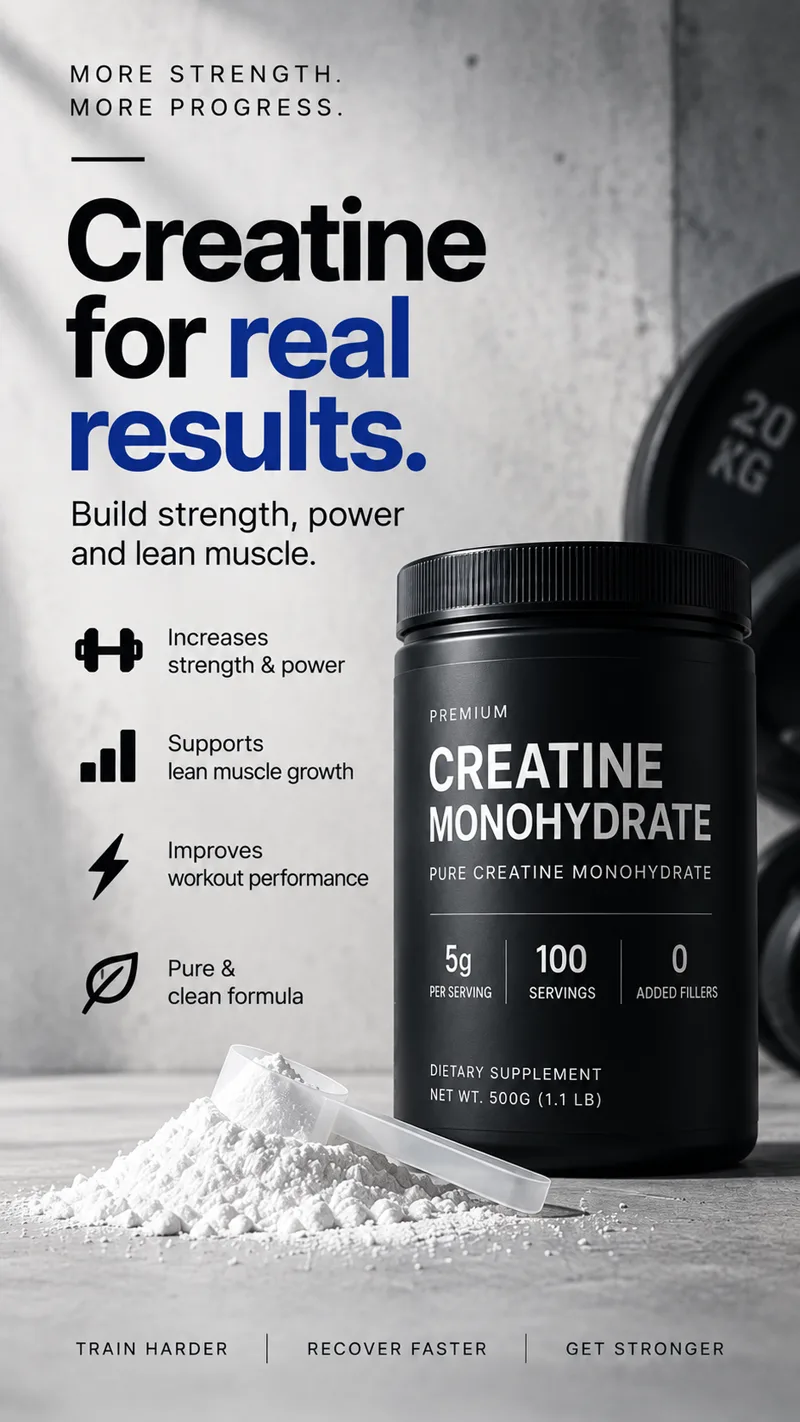
Every creatine is the same, so why yours?
It answers on servings and fillers, because the molecule is the same across brands.
The objection
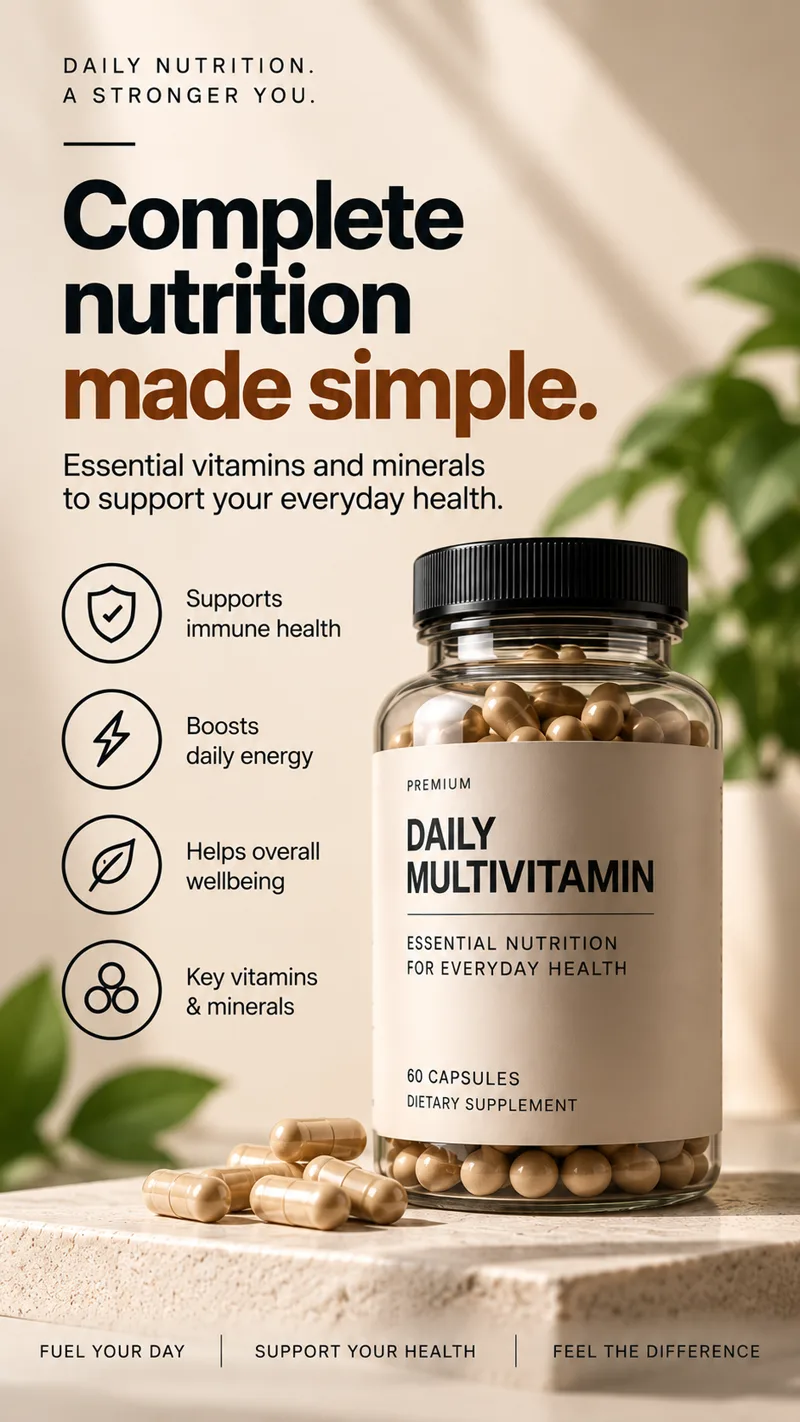
I do not know what I am missing.
Sells the simplicity, not the ingredient list. The buyer of a multivitamin is buying the end of a decision.
The objection
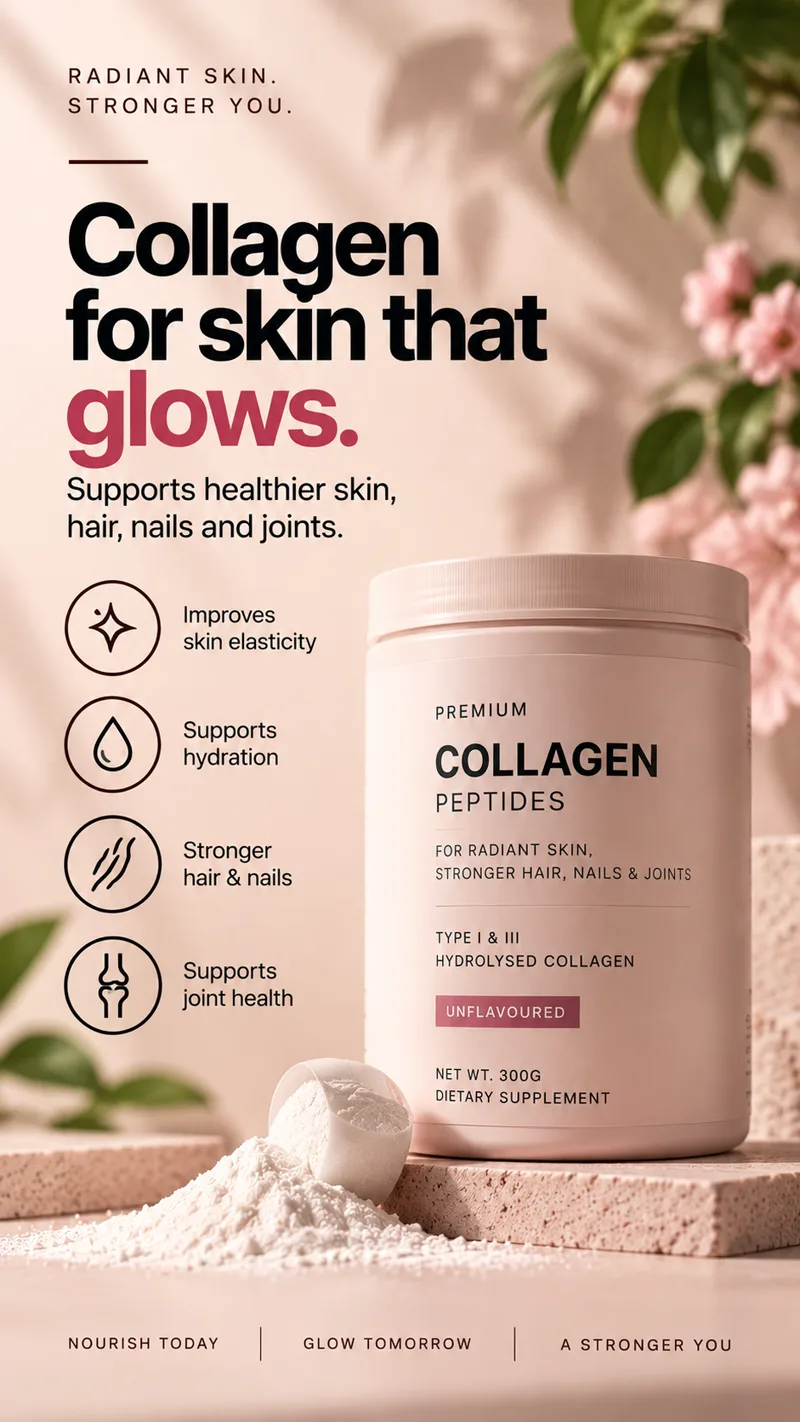
Does this actually do anything?
Four outcomes, in the order the buyer cares about them. Joints last, because nobody buys collagen for their joints first.
The objection
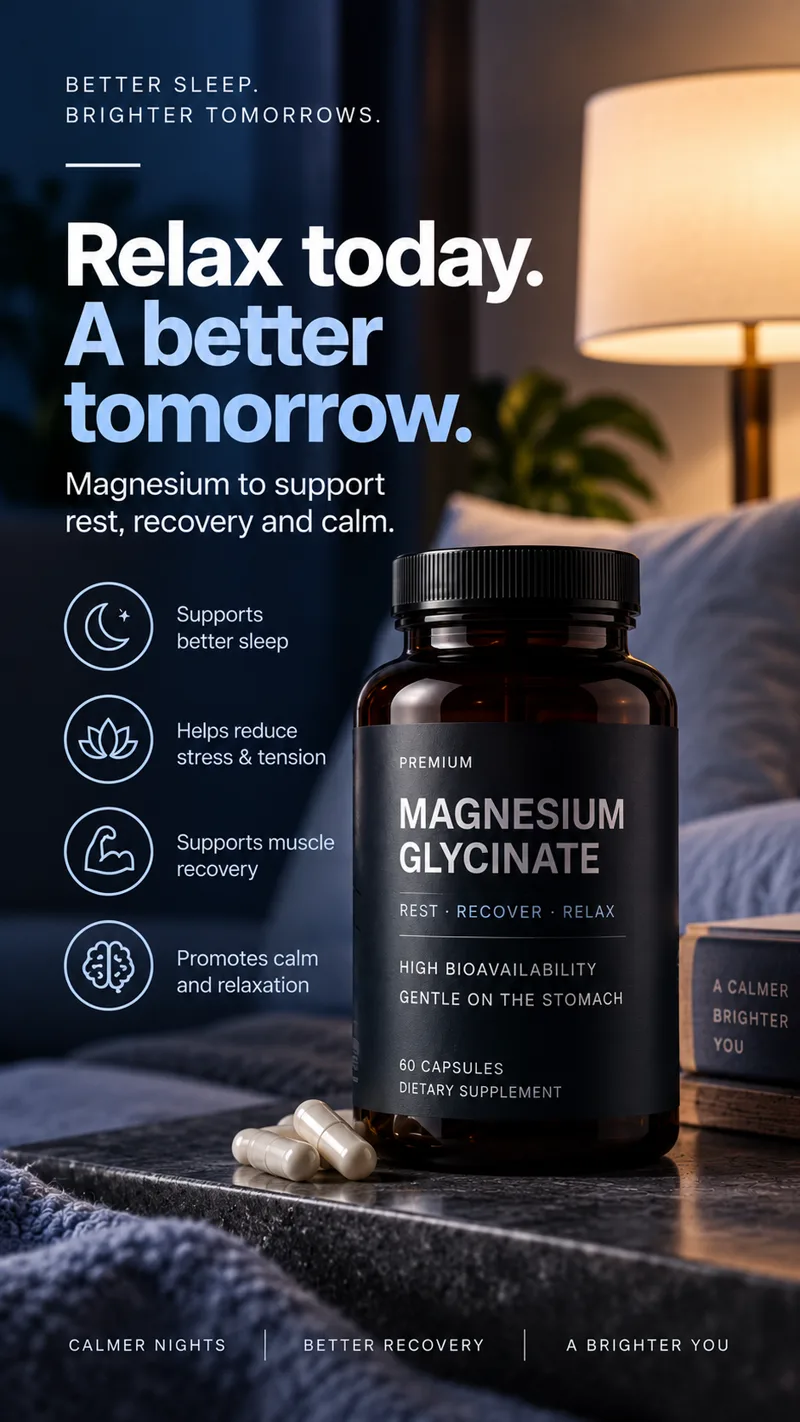
Magnesium upsets my stomach.
Glycinate and gentle on the stomach sit on the label. The frame sells the evening instead.
The objection
Does it work for someone like me?
The review format works on someone already weighing it up, not on a stranger. That puts this frame in retargeting rather than at the top of the account.
The objection
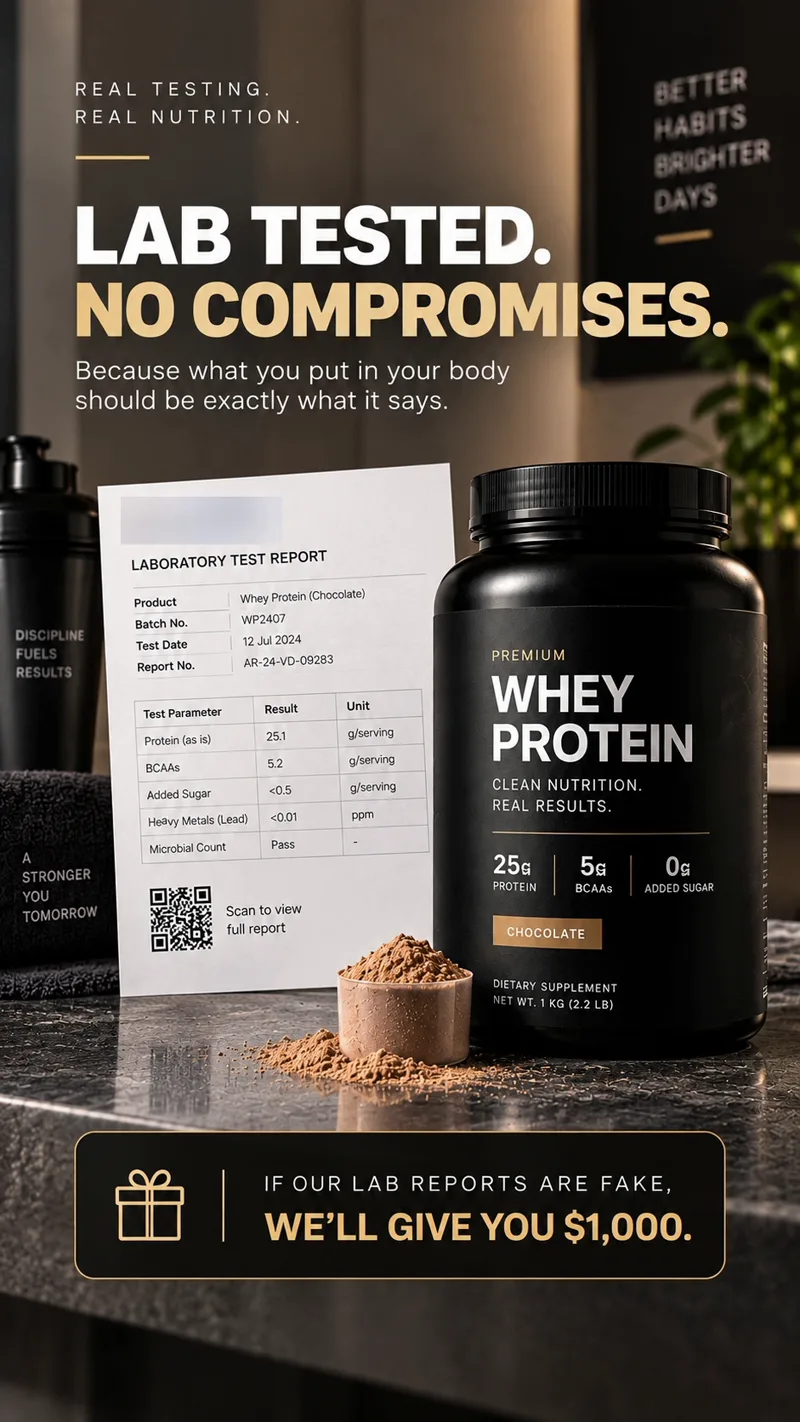
How do I know what is actually in the tub?
Every competitor asserts purity. This one puts the certificate in frame and invites you to scan it.
The objection
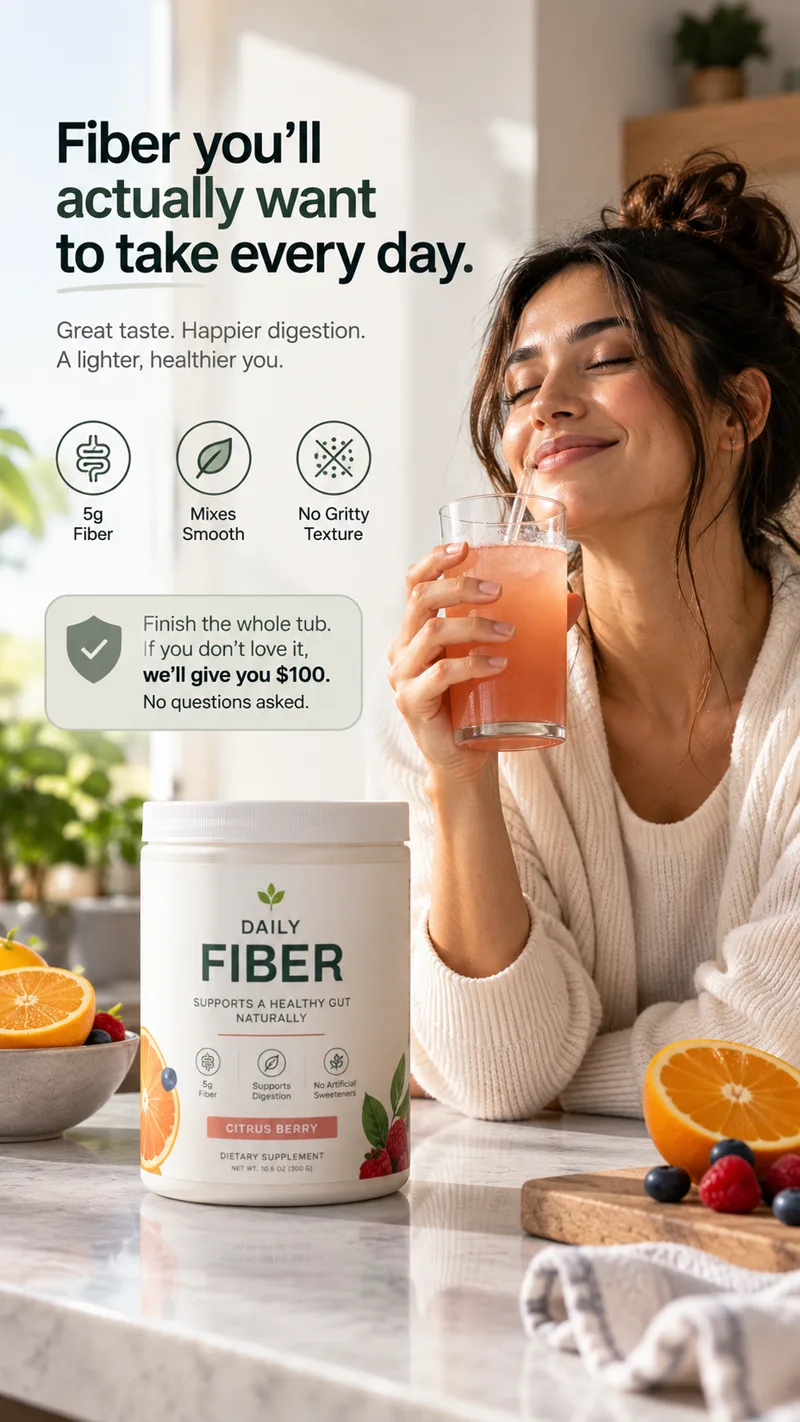
Fiber drinks are gritty and I stop taking them.
Nobody abandons a fiber tub over the gram count, they abandon it over the texture. So the frame sells the texture and lets the 5 g sit in a chip underneath.
Concept work, not client campaigns. No results are claimed for them.
Straight answer
What this is, and what it is not.
Concept pieces, built to show how a brief becomes an argument. The brands on them are not real and they have not run, so there is no click-through rate or ROAS to quote for any frame above. Anyone showing you creative with performance numbers attached to invented brands is showing you something else. The account record is separate, and it is real.
Method
Research, test, review and improve.
Each round should make the next round smarter. We keep what works and stop repeating what does not.
Illustration
One test cycle, invented results
Five ads, each built around one question, run on the same budget for a week.Two ideas sold. The other three are switched off, with the reason written down.The winners get new hooks and formats. The losing ideas are not remade in new colours.
Proof
Does a lab certificate in frame earn trust?
2.6 sales per $100
New hook: the certificate in the first second
New format: a carousel of the test results
Taste
Does "tastes like a mango shake" beat the chalk worry?
2.2 sales per $100
New hook: the pour, on a 4-second loop
New format: a creator taste test
Comfort
Does "no bloat" win people who quit whey?
1.1 sales per $100
Logged: Right worry, weak picture
Speed
Does "mixes in five seconds" matter to buyers?
0.9 sales per $100
Logged: Nobody buys protein for speed
Price
Does cost per serving pull buyers in?
0.8 sales per $100
Logged: Cheap clicks, few buyers
Sales per $100 of spend is one way to score an ad; the job each ad was given decides the measure. Results here are invented to show the method.
01 — Research
Start with what buyers say.
We review sales calls, comments, reviews, searches, competitor claims and your current ads. This tells us what buyers want, what worries them and what proof they trust. For supplements, it also tells us which claims the platforms will run: see our supplement advertising examples.
BuyerLanguage collected
OfferClaims prioritised
02 — Question
Every ad tests one clear idea.
Proof or aspiration? Speed or price? We write down the audience, the message and what we expect to happen before anything gets made.
1Question per concept
LoggedBefore launch
03 — Production
Make enough versions to learn clearly.
We create headlines, scripts, image ads, carousels and creator briefs around the chosen ideas. Each version has a reason to exist.
3–5Angles in a test cycle
FormatChosen for the idea
04 — Review and improve
Results decide what we make next.
We read attention, clicks, enquiries and sales together, then build more of what won and write down why the rest lost.
WeeklyAd results review
BothWins and losses logged
Deliverables
What we can create.
We choose the format that best tests the idea.
Static ads and carousels
Clear image ads with one main message and one reason to act. When an idea works, we create fresh versions without simply repeating the same ad.
Short-form scripts and creator briefs
Scripts include a strong opening, proof, answers to common doubts and a clear next step. Creators get room to sound natural.
Landing-page message direction
The landing page continues the promise made in the ad. Its headline, proof and next step all support the reason someone clicked.
Questions
Before the first round of ads.
Do you produce the finished ads?
Yes. Static concepts, carousels, copy and editing direction can be produced by us. For original shoots and creator-led work, we can brief your team or creators and manage the performance requirements around the production.
How many ads do we need each month?
There is no single number. It depends on your budget, audience size and how quickly enough results arrive. We make enough different ideas to learn without creating piles of nearly identical ads.
Can you work with our in-house designer?
Yes. We can handle the research, testing plan, briefs and results review while your team makes the ads. We agree who does what before work starts.
Will the ads still follow our brand?
Yes. We keep the brand recognisable while making each ad clear and noticeable enough to earn attention.
How do you decide that an ad worked?
We compare it with the job it was given. Clicks show whether it earned attention. Enquiries and revenue show whether it attracted the right people. A cheap click is not useful when nobody buys.
Next step
Making more ads without knowing what works?
Bring your last month of ads and results. We'll show you what worked, what did not and what we would test next.
$5,000+ monthly ad spendSupplements and wellness brandsEstablished with a live offer